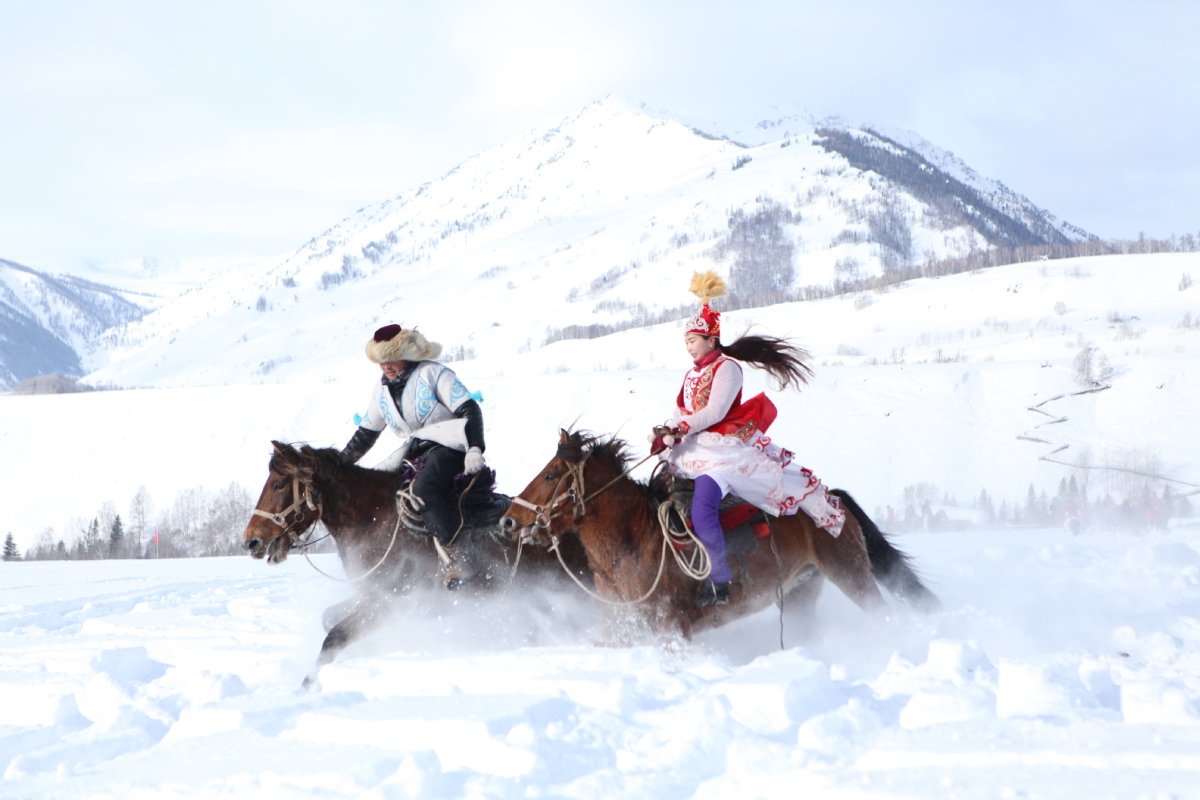
Costume of Kazak Ethnic Group
Introduction
The Kazak ethnic group, primarily residing in the Xinjiang Uygur autonomous region of China, is renowned for its vibrant cultural heritage, which is vividly expressed through their traditional costumes. These costumes are not only a fundamental aspect of their cultural identity but also a reflection of their historical lifestyle as nomadic herders on the vast grasslands. The traditional attire of the Kazak people, often seen during cultural events and festivals, is characterized by its intricate designs and rich symbolism, embodying the spirit and resilience of this ethnic group. The costumes serve as a testament to the Kazak people's adaptability to the harsh climates of their native lands, showcasing their resourcefulness in creating clothing that is functional yet aesthetically pleasing.
Traditional Attire
Traditional Kazak attire is crafted with consideration of the regional climate and the nomadic lifestyle. For men, this typically includes long coats known as "chapan" or "shekpen", often made from felt or wool to provide warmth in the cold climates. These coats are sometimes lined with fur, which is also used in hats and boots. Women's traditional attire usually consists of long dresses adorned with embroidery, layered with colorful vests or jackets. Headscarves or headdresses, often embroidered or decorated with beads, are common among women. The traditional attire is not just functional but also meticulously crafted to include decorative elements that signify social status, marital status, and even the wearer's role within the community.
Materials and Craftsmanship
Fabrics and Textiles
The materials used in the creation of Kazak costumes are selected both for their practicality and their cultural significance. Wool and felt are predominant, reflecting the traditional reliance on livestock for material resources. These textiles provide the necessary insulation against the harsh climates of the grasslands. Additionally, silk and cotton are employed for lighter garments, especially in summer attire. The choice of fabric often depends on the occasion, with more luxurious materials being reserved for special events and ceremonies. The craftsmanship involved in textile production is a skill passed down through generations, illustrating the cultural importance placed on maintaining traditional practices.
Decorative Techniques
Decorative techniques are a hallmark of Kazak costume design, adding layers of meaning and beauty to the garments. Embroidery is perhaps the most distinguished technique, often featuring motifs that symbolize elements of nature, clan symbols, or protective charms. The color and complexity of the embroidery can denote the wearer's age, marital status, or social position. Beading and applique are also common, enhancing the visual appeal of the attire and reflecting the cultural emphasis on detailed craftsmanship. These decorative elements are not merely ornamental but are imbued with cultural narratives that connect the wearer to their heritage and community.
Symbolism and Colors
Color plays a vital role in the symbolism of Kazak costumes, with each hue carrying specific meanings. For instance, red is often associated with happiness and prosperity, frequently used in garments for weddings or celebrations. Blue, symbolizing the sky and peace, is another prominent color in Kazak attire. Green is linked to nature and renewal, reflecting the Kazak people's deep connection to the land. The use of gold and silver in embroidery or accessories signifies wealth and status. These colors, combined with intricate patterns and symbols, create a rich tapestry that conveys the cultural narratives and values of the Kazak people, making their costumes a vibrant expression of their identity.








